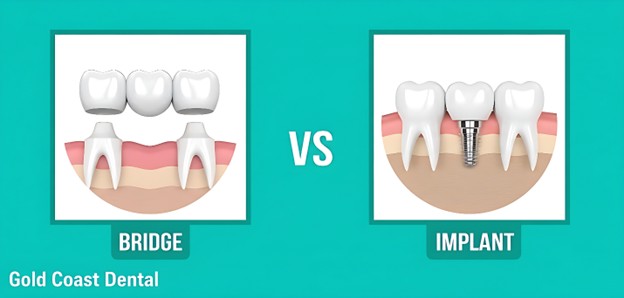
Replacing missing teeth is one of the most common dental needs, and two leading options often compared are dental implants vs bridges. Both restore your smile, improve function, and protect oral health—but they work differently, come with different costs, and suit different patients. At Gold Coast Dental, with 23 locations across California and Texas, patients often ask: Which is better for me? Let’s explore both solutions so you can make a confident choice. You can also find your nearest location to discuss these options with our team.
What Are Dental Implants?
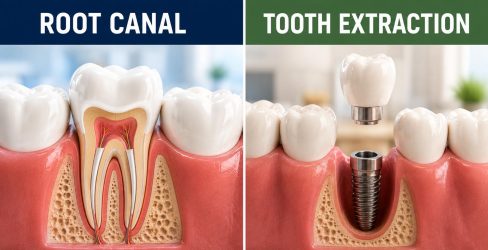
Dental implants are titanium posts surgically placed in the jawbone to replace missing tooth roots. After healing, a crown is attached to create a natural-looking, permanent replacement tooth. Once the implants fuse with bone, they provide unmatched stability and can last a lifetime with proper care.
Key benefits of implants:
- Preserve jawbone and facial structure by preventing bone loss
- Do not affect adjacent healthy teeth
- Natural look and feel
- Long-term solution with high success rates
What Are Dental Bridges?
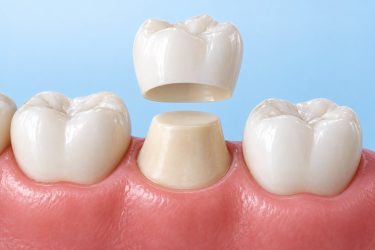
Bridges are fixed prosthetic devices that replace one or more missing teeth by anchoring an artificial tooth to adjacent natural teeth (or implants). The supporting teeth are filed down to fit crowns, which hold the bridge in place.
Key benefits of bridges:
- Faster treatment (usually 2–3 weeks)
- Lower initial cost compared to implants
- Reliable and predictable for single or multiple adjacent teeth replacement
- No surgery required
- Often better covered by insurance
Dental Implants vs Bridges: Main Differences
Dental implants vs bridges is one of the most common comparisons in modern dentistry. Dental implants are surgically placed into the jawbone, while bridges are supported by adjacent teeth.
- Longevity: Implants can last 25+ years; bridges often last 7–15 years before replacement.
- Cost: Initial bridge cost is lower, but implants are more cost-effective long-term.
- Bone health: Implants stimulate bone growth; bridges do not.
- Impact on other teeth: Implants preserve surrounding teeth; bridges require filing of adjacent teeth.
Which Option Is Better for a Single Missing Tooth?
When replacing one tooth, many dentists recommend an implant. A dental implant solution restores the tooth root and crown without involving other teeth. Bridges are suitable when implants are not possible (for example, insufficient bone or health restrictions).
Do Implants Last Longer Than Bridges?
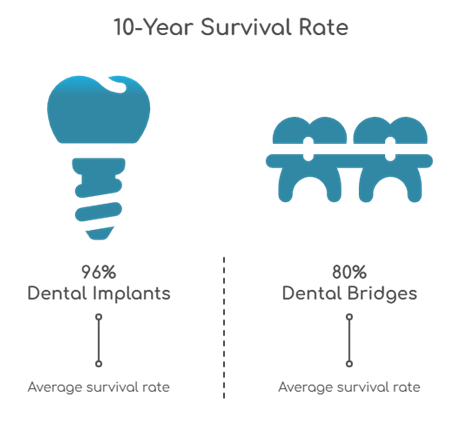
Yes. Research shows implants have a 10-year survival rate of 94–98%, compared to bridges at 72–87%(Jung et al., 2012; Pjetursson et al., 2015). With proper care, implants may last a lifetime, while bridges often need replacement every 10–12 years.
Are Implants More Expensive Than Bridges?
Upfront, implants typically cost more. However, bridges may require replacement 2–3 times in a lifetime, raising overall costs. A dental implants vs bridges cost comparison shows implants are more economical long-term.
Pros and Cons of Dental Implants vs Bridges
Implants Pros:
- Preserve jawbone health
- Natural appearance
- Long-term durability
- Independent of neighboring teeth
Implants Cons:
- Higher upfront cost
- Surgical procedure required
- Longer treatment time (3–6 months healing)
Bridges Pros:
- Faster treatment
- Lower upfront cost
- No surgery
Bridges Cons:
- Can damage adjacent teeth
- Do not prevent bone loss
- Shorter lifespan
How Do Implants and Bridges Affect Oral Health Over Time?
Implants stimulate bone growth and prevent jawbone shrinkage.
Bridges may lead to bone loss in the gap since no root is replaced.
Bridges may increase risk of decay or gum disease in supporting teeth.
Implants help preserve oral structure and facial shape long-term.
Recovery Time: Dental Implants vs Bridges
Implants: Healing takes 3–6 months after surgery before placing the crown.
Bridges: Typically completed in 2–3 weeks with minimal downtime.
Patients who want quick results often prefer bridges, while those prioritizing longevity and bone health choose implants.
Can Dental Implants and Bridges Be Combined?
Yes. In some cases, implants are placed at the ends of a gap, and a bridge spans across them. This option, called an implant-supported bridge, is ideal when replacing multiple teeth without anchoring to natural teeth.
Durability and Maintenance
Implants: Require brushing, flossing, and regular checkups; failure rate under 5% after 10 years.
Bridges: Require extra cleaning under the pontic (the artificial tooth); failure rates are higher over time.
Cost Comparison Table
| Factor | Dental Implants | Bridges |
|---|---|---|
| Average lifespan | 25+ years (often lifetime) | 7–15 years |
| Cost range (per tooth) | $3,000–$5,500 | $1,500–$3,000 |
| Impact on adjacent teeth | None | Requires filing |
| Bone preservation | Yes – stimulates bone growth | No – bone loss likely |
| Procedure time | 3–6 months | 2–3 weeks |
Preparation and Aftercare Tips
Before treatment:
- Get a dental exam and imaging to check bone health.
- Stop smoking if possible; it reduces healing success for implants.
After treatment:
- Maintain daily brushing and flossing.
- Use floss threaders or water flossers for bridges.
- Attend regular dental visits every 6 months.
Common Myths About Implants and Bridges
“Implants are painful.” In reality, the procedure is done under local anesthesia and most patients report mild discomfort similar to a tooth extraction.
“Bridges are outdated.” Modern bridges are strong, aesthetic, and still widely recommended.
“Implants are only for the young.” Seniors with good bone health can benefit from implants too.
Who Should Choose Implants?
- Patients with good jawbone density
- People looking for a long-term solution
- Individuals who want to preserve surrounding teeth
- Patients who value natural appearance and feel
Who Should Choose Bridges?
- Patients wanting quicker treatment
- Those with limited budgets
- Individuals with medical conditions preventing surgery
- Patients needing to replace multiple adjacent teeth quickly
Final Thoughts: Choosing Between Dental Implants and Bridges
Choosing dental implants vs bridges depends on your health, goals, budget, and timeline. Implants provide unmatched longevity and bone preservation, while bridges remain a trusted, quicker, and affordable solution. At Gold Coast Dental, our specialists help patients compare all options so they feel confident in their choice.
We invite you to check our locations page to find your nearest Gold Coast Dental location in California or Texas. Whether you’re ready to restore a single missing tooth or want a full consultation, you can call us now or book a session today.
Related services: Cosmetic Dentistry and Emergency Dentistry.